
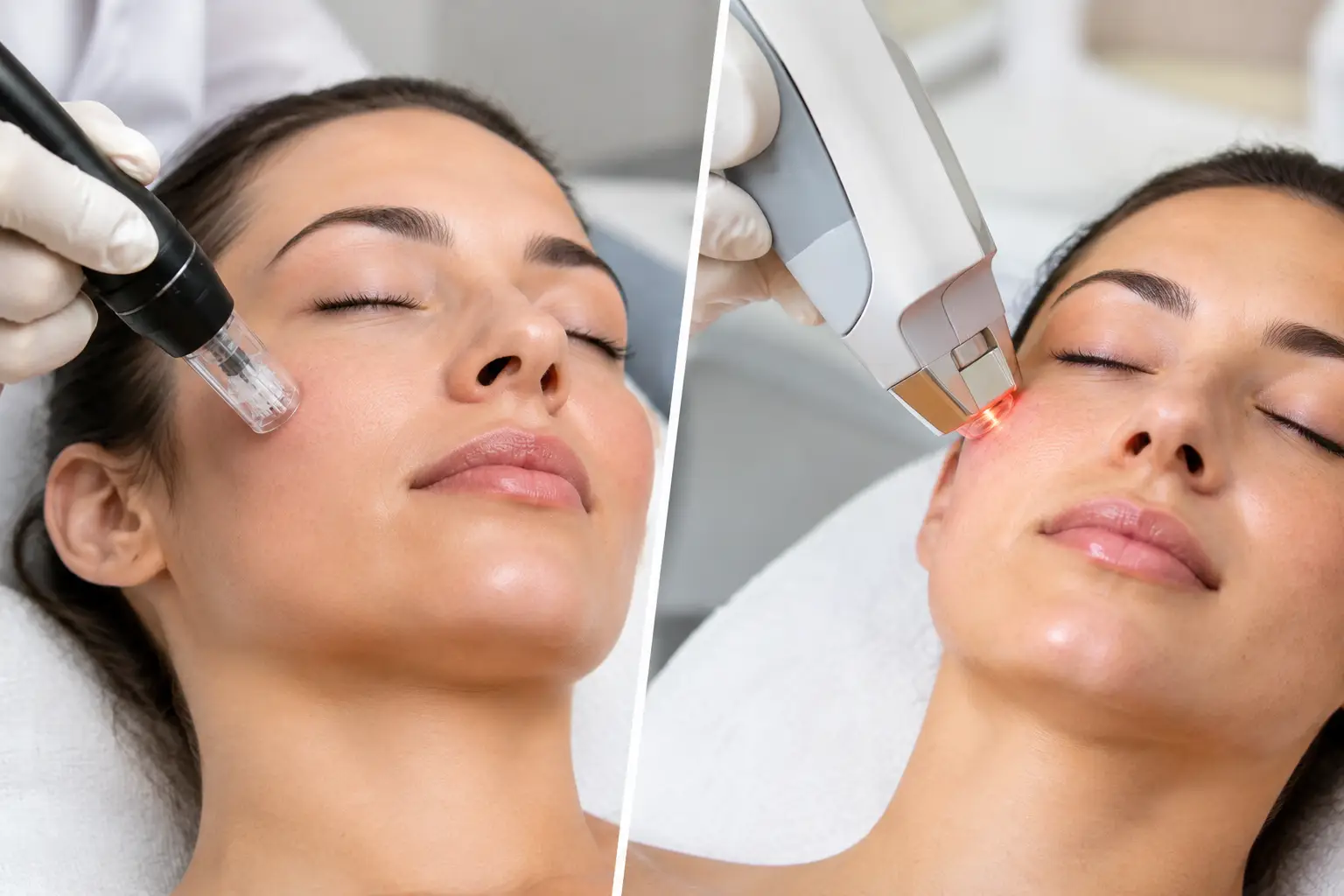
RF Microneedling Versus Laser Resurfacing
A smoother complexion rarely comes from choosing the strongest treatment on the menu. With RF microneedling versus laser resurfacing, the better option depends on what you want to improve, how much downtime fits your life, your skin tone, and how quickly you hope to see change. Both treatments encourage renewed collagen and can create meaningful improvement, but they work in different ways.
For someone bothered by acne scars, enlarged pores, early laxity, sun damage, fine lines, or uneven texture, the choice can feel confusing. A thoughtful consultation makes the decision clearer. The goal is not to change your face or chase an overtreated look. It is to support healthier-looking skin that still looks like you.
How RF Microneedling Works
RF microneedling combines two collagen-stimulating techniques. Very fine needles create controlled microchannels in the skin while radiofrequency energy delivers heat at selected depths beneath the surface. This controlled process signals the body to produce fresh collagen and elastin, the proteins that help skin feel firmer, smoother, and more resilient.
Because much of the energy is delivered below the top layer of skin, RF microneedling can be especially useful for concerns involving texture and support. It is often chosen for acne scarring, enlarged pores, crepey texture, fine lines, mild skin laxity, and early jowling. It may also be used on areas beyond the face, such as the neck, chest, abdomen, or areas with certain types of scarring.
A typical appointment includes cleansing, topical numbing, treatment, and calming post-care products. Most patients describe a warm, prickly sensation rather than significant pain. Afterward, the skin may look pink or mildly swollen, similar to a moderate sunburn. Many people feel comfortable returning to normal routines within one to three days, although redness can last longer for some patients.
Results develop gradually. You may notice an initial healthy glow after treatment, but collagen remodeling continues over several weeks and months. A series of treatments is commonly recommended because each session builds on the last.
How Laser Resurfacing Works
Laser resurfacing uses focused light energy to target the skin. Depending on the laser and settings selected, the treatment can heat deeper tissue, refresh the surface, or do both. Some lasers create tiny treatment channels while leaving surrounding skin intact, a method often called fractional resurfacing. Others remove more of the skin’s surface for a stronger resurfacing effect.
Laser treatment can be an excellent choice when visible sun damage, uneven pigmentation, fine lines, rough texture, or superficial scars are the main concern. It can also improve overall brightness and clarity in a way that some patients find especially noticeable. However, laser resurfacing is not one single experience. A gentle non-ablative treatment and a deeper ablative laser procedure can differ greatly in recovery time, intensity, and results.
With lighter laser treatments, redness and dryness may last a few days. More intensive resurfacing can involve several days to two weeks or more of peeling, crusting, redness, and careful aftercare. Deeper treatments may produce more dramatic improvement in one session, but they require a real recovery plan. That can mean scheduling around work, social events, sun exposure, and travel.
RF Microneedling Versus Laser Resurfacing: The Key Differences
The most practical difference is where each treatment does its work. RF microneedling is designed to create controlled injury beneath the skin while preserving much of the surface. Laser resurfacing can target both surface-level concerns and deeper tissue, depending on the technology used.
If your priority is firmer-looking skin, acne scars, pores, or texture with relatively modest downtime, RF microneedling may be a strong fit. Its ability to deliver energy at adjustable depths can be valuable when treating scars or mild laxity. It is also often considered for a wider range of skin tones, though every treatment still requires an individualized assessment.
If discoloration, photodamage, rough surface texture, or fine lines around the eyes and mouth are central concerns, laser resurfacing may offer advantages. Certain lasers are particularly effective for resurfacing the uppermost layers of skin and improving the appearance of sun-related changes. For some patients, that surface renewal is exactly what RF microneedling cannot fully replicate.
Neither treatment is automatically better. A person with acne scars and early laxity may benefit more from RF microneedling, while someone with significant sun damage and pronounced texture may be better served by laser resurfacing. In some care plans, treatments are used at different times because they address complementary concerns.
Downtime and Social Recovery
RF microneedling generally has the shorter social recovery period. Redness, tightness, mild swelling, and pinpoint marks may occur, but makeup is often possible after the recommended healing window. Your provider will let you know when it is appropriate based on your skin’s response.
Laser resurfacing has a broader range. A mild treatment may involve a few days of redness and flaking, while stronger resurfacing can require more visible healing. If you have a wedding, vacation, important photographs, or a demanding work schedule approaching, this difference matters as much as the treatment itself.
Treatment Series and Timing
RF microneedling commonly works best as a series, often spaced several weeks apart. This approach gives the skin time to build collagen between sessions. Laser plans vary more widely. Some lighter laser treatments are performed in a series, while a deeper procedure may be selected less frequently.
Patience is part of both options. Skin remodeling is biological, not instant. An ethical aesthetic plan should set realistic expectations instead of promising a dramatic overnight transformation.
Skin Tone and Safety Considerations
Every energy-based treatment should be selected carefully, particularly for patients with a history of hyperpigmentation, melasma, keloid scarring, cold sores, or sensitivity to post-inflammatory color changes. People with deeper skin tones can absolutely pursue skin rejuvenation, but device selection, energy settings, preparation, and aftercare need to be tailored with care.
Laser treatment can carry a higher risk of pigment changes for certain skin types or when performed too aggressively. RF microneedling may be a preferred option for some patients because it places much of its energy deeper in the skin. Still, it is not risk-free. Proper technique, sterile treatment practices, licensed providers, and a careful review of your health and skin history are essential for either procedure.
What Happens During a Personalized Consultation
A good consultation goes beyond asking whether you want a laser or microneedling appointment. Your provider should examine your skin in person, discuss your main concerns, review your current skin care routine, and ask about medications, medical conditions, past cosmetic procedures, and how your skin has healed in the past.
You should also talk honestly about your lifestyle. Are you able to avoid sun exposure? Can you manage a week of visible peeling if needed? Are you comfortable completing a treatment series? Do you want to target one specific concern, or are you looking for overall skin renewal? These answers help determine whether a gradual, low-downtime plan or a more intensive resurfacing approach makes sense.
At Compassionate Health Med Spa, personalized care means recommending what supports your goals, not pushing the most aggressive procedure. Sometimes the best recommendation is a single treatment. Other times, it is a sequence that may include medical-grade skin care, Hydrafacial treatments, RF microneedling, laser services, or another approach based on what your skin truly needs.
Preparing for Better Healing
Your provider may ask you to pause certain active skin care ingredients before treatment, especially retinoids, exfoliating acids, or products that cause irritation. Avoiding tanning and protecting your skin from the sun are especially important. Depending on your history, preventative medication for cold sores or other pre-treatment steps may be recommended.
After either procedure, follow the aftercare instructions closely. Use gentle products, avoid picking or scrubbing, limit heat and strenuous exercise as directed, and wear broad-spectrum sunscreen every day. The treatment does not end when you leave the office. Thoughtful healing habits help protect your investment and support more even results.
The right treatment should leave you feeling informed, comfortable, and respected. Whether your path is RF microneedling, laser resurfacing, or a carefully timed combination, choose the option that fits your skin, your schedule, and the natural-looking confidence you want to carry forward.
