
What to Expect From Keralase Hair Restoration Treatment
Hair changes can feel surprisingly personal. You may notice more scalp showing at the part line, a wider ponytail, or extra strands in the shower long before anyone else does. Keralase hair restoration treatment offers a non-surgical option for people who want to support fuller-looking, healthier hair without committing to a transplant or a lengthy recovery.
At Compassionate Health Med Spa, hair restoration is approached as a confidence and wellness concern, not a reason to pressure you into dramatic procedures. The right plan begins with understanding your hair history, scalp health, goals, and the factors that may be contributing to thinning.
What Is Keralase Hair Restoration Treatment?
Keralase is a treatment designed to support the appearance of thicker, fuller hair using advanced laser technology and a specialized topical serum. The treatment uses a non-ablative fractional laser to create microscopic channels in the scalp. These channels are intended to help the topical KeraFactor serum reach the areas where it can support the scalp environment and hair follicles.
The serum contains bio-identical growth factors, which are proteins involved in normal cellular communication. In a hair restoration setting, the goal is to encourage a healthier-looking scalp and support the hair’s natural growth cycle. It is a needle-free approach, which makes it appealing to many people who want a clinically guided option without injections or surgery.
Keralase is not a hair transplant, and it does not move hair follicles from one area of the scalp to another. It also is not an overnight fix. Hair grows in cycles, so visible changes typically require patience and a consistent treatment plan.
Who May Be a Good Candidate?
Hair thinning has many causes. Genetics, hormonal shifts, aging, stress, nutritional changes, illness, medications, tight hairstyles, and certain scalp conditions can all play a role. Keralase may be worth discussing if you have early to moderate thinning, increased shedding, a widening part, or hair that seems less dense than it once was.
It can be a particularly practical choice for women and men who want to take action before thinning becomes more advanced. Some people choose it as a stand-alone treatment, while others use it alongside a broader plan that may include medical evaluation, topical products, or lifestyle support. The best approach depends on what is driving the hair change in the first place.
A consultation matters because not every type of hair loss responds the same way. Sudden shedding, patchy hair loss, scalp pain, inflammation, or extensive hair loss should be medically evaluated. In those situations, identifying the underlying cause is more important than simply starting an aesthetic treatment.
When expectations need to be realistic
Keralase may support hair quality and density, but no responsible provider can promise a specific amount of regrowth. Results vary based on the cause and duration of thinning, your genetics, overall health, and how consistently you follow your plan. Areas where follicles are still active often have more potential than areas that have been bare for a long time.
For some patients, the goal is visible new growth. For others, success may look like less shedding, stronger-feeling hair, or maintaining the density they still have. Both can be meaningful outcomes.
What Happens During a Keralase Appointment?
Your appointment starts with a conversation about your concerns, health history, current medications, and hair goals. Your provider will assess the pattern of thinning and the condition of your scalp, then determine whether Keralase fits your needs or whether another recommendation should come first.
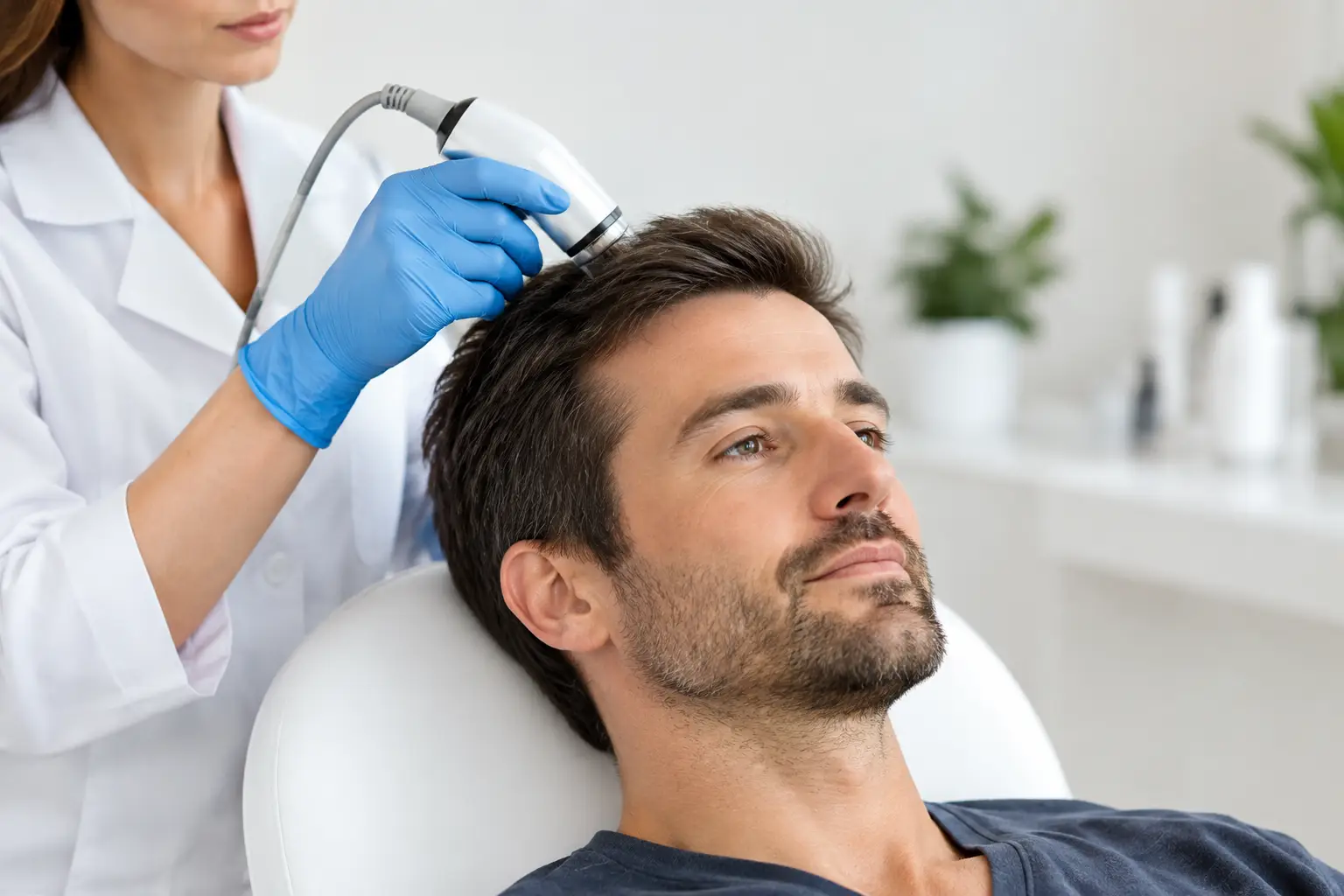
During treatment, the laser handpiece is passed over the scalp in the areas of concern. Most patients describe the sensation as warm or mildly prickly rather than painful. The treatment is generally well tolerated, and numbing is typically not needed.
After the laser portion, the KeraFactor serum is applied to the treated areas. The full visit is commonly brief enough to fit into a busy day. There is usually little to no downtime, although your provider may give you specific instructions about washing your hair, scalp products, sun exposure, and exercise immediately afterward.
Your scalp may look mildly pink for a short time, and some people notice temporary warmth or sensitivity. These effects are generally mild. Following aftercare instructions helps protect your scalp and supports a comfortable recovery.
How Many Treatments Are Usually Recommended?
A series of treatments is commonly recommended rather than a single appointment. Many Keralase protocols involve six sessions scheduled about two weeks apart, followed by periodic maintenance based on your response and goals. Your individual plan may differ, especially if your hair loss is recent, more established, or connected to a medical concern.
Hair growth is slow by nature. Some patients begin to notice less shedding or improved texture first, while visible density changes can take several months. Progress photos can be helpful because gradual improvement is often easier to see when you compare consistent images over time rather than checking the mirror every day.
Consistency matters outside the treatment room as well. If your provider recommends a home-care routine or a medical follow-up, staying with that plan can make a difference. There is no one-size-fits-all answer, particularly when hormonal changes, nutrition, stress, or chronic health conditions are involved.
Benefits of a Non-Surgical Hair Restoration Option
The biggest advantage of Keralase hair restoration treatment is its ability to offer a comfortable, non-surgical path for people who are not ready for more invasive procedures. There are no incisions, no needles, and typically no need to step away from work or social plans for recovery.
It also gives patients a structured way to address thinning early. Waiting can feel easier in the moment, but early support may be useful when follicles are still producing hair. That does not mean every person needs treatment right away. It means a thoughtful assessment can help you make an informed choice rather than guessing.
For many people, the emotional benefit matters too. Hair thinning can affect how you style your hair, how you feel in photos, and how much mental energy you spend trying to conceal certain areas. Seeking care is not vanity. It can be one part of feeling more like yourself.
Questions to Ask Before Starting Treatment
Before choosing any hair restoration service, ask what technology is being used, what the treatment can realistically address, and how your provider will track your progress. You should also ask whether your pattern of thinning suggests a medical evaluation or laboratory testing before treatment begins.
A quality consultation should leave room for honest questions. You deserve clear information about the expected treatment schedule, total investment, possible side effects, and whether maintenance will likely be needed. If a provider promises guaranteed regrowth or pushes a treatment without examining your scalp and history, that is a reason to pause.
At Compassionate Health Med Spa, personalized care means recommending what makes sense for you, including when Keralase is not the right first step. Our licensed team can help you understand your options in a supportive setting, with attention to your comfort and long-term goals.
If hair thinning has been weighing on your confidence, a consultation can turn uncertainty into a practical next step. You do not have to wait until the concern feels overwhelming to ask questions, learn what may be contributing, and explore care that respects both your health and your natural look.
