
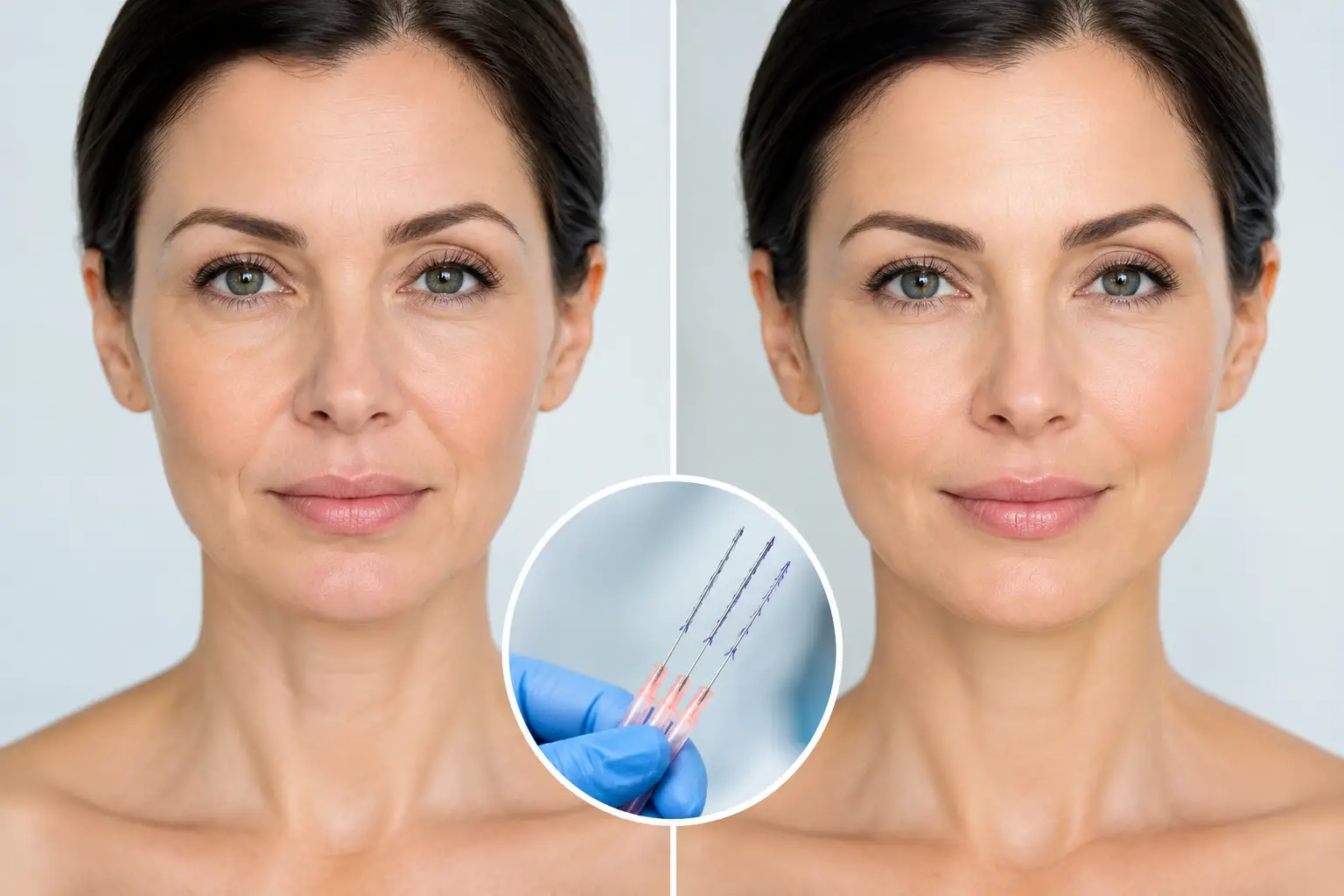
PDO Threads Before and After: What Happens
A mirror can make a subtle loss of facial support feel much bigger than it is. You may notice that your cheeks seem less lifted, your jawline less defined, or the skin around your lower face less firm than it once was. For people who want a refreshed appearance without surgery or an overdone result, PDO threads can be a thoughtful option. Looking at PDO threads before and after photos is helpful, but understanding the healing process behind those images is what helps you set realistic, confident expectations.
PDO thread lifts are designed to support and reposition selected areas of tissue while encouraging collagen production over time. The goal is not to make you look like someone else. It is to help your features look more rested, supported, and naturally refreshed.
What PDO Threads Can Change
PDO stands for polydioxanone, a material used in medical sutures for many years. During a thread lift, a licensed provider places fine, dissolvable threads beneath the skin using a small needle or cannula. Depending on the type of thread and treatment area, the threads may create a gentle lifting effect, provide structure, or stimulate collagen in areas where skin quality has begun to change.
Thread lifts are often considered for mild to moderate skin laxity. Common treatment areas include the cheeks, midface, jawline, jowls, neck, brows, and the area around the mouth. Some clients also benefit from smooth PDO threads in areas where collagen support, rather than a physical lift, is the primary goal.
The best before-and-after changes usually look believable. A successful result may mean a cleaner jawline, a softer appearance of jowling, a slight lift through the cheeks, or skin that appears firmer over the months following treatment. It does not erase every wrinkle, replace significant volume loss, or create the same degree of change as a surgical facelift.
PDO Threads Before and After: The Real Timeline
The most accurate way to think about PDO thread results is in stages. An immediately after photo may show a visible lift, but it can also show swelling, temporary puckering, or mild redness. Those early effects are not the final outcome.
Right after your appointment
After treatment, it is normal to have mild swelling, tenderness, bruising, or a tight sensation in the treated area. Some people notice small dimples or puckering where the threads were placed. These changes often improve as the tissue settles, although every person heals differently.
Your provider may recommend avoiding strenuous workouts, aggressive facial massage, dental work, and wide mouth movements for a period of time. Sleeping on your back with your head elevated can also help protect the treatment area during early healing. Specific aftercare instructions should always come from your treating clinician, because the right plan depends on the areas treated and the type of threads used.
The first two weeks
By the end of the first week, many clients feel comfortable returning to regular social routines, though bruising can last longer for some people. Swelling begins to decrease, and the face starts to look more like itself. This is often when clients can better appreciate the initial support created by the threads.
It is still wise to be gentle with your skin. Avoid facials, facial massage, and treatments that put pressure or heat on the area unless your provider tells you they are appropriate. A thread lift is minimally invasive, but it is still a medical aesthetic procedure that deserves careful recovery time.
One to three months later
This is when the collagen-building aspect of treatment becomes more apparent. PDO threads gradually dissolve, but the body responds by forming supportive collagen around the treated areas. Skin may look firmer and feel more resilient, with a gradual improvement rather than a sudden dramatic change.
This timing is why a single before-and-after image can be misleading. Photos taken immediately after treatment may highlight lift, while photos taken several weeks or months later may better show improved skin quality and a more settled, natural-looking contour.
Long-term expectations
Results vary based on skin quality, age, genetics, lifestyle, thread type, and the number of threads used. Many people enjoy visible improvement for about 12 to 18 months, though collagen support and individual results can vary. Maintenance treatments, good skincare, sun protection, and complementary services may help support a longer-lasting result.
Who Is a Good Candidate for a Thread Lift?
PDO threads tend to work best for adults with mild to moderate laxity who want improvement without surgery. You may be a candidate if you have noticed early jowling, softening along the jawline, mild cheek descent, or a less defined facial contour. People who value gradual, natural-looking enhancement often appreciate what threads can offer.
A thread lift may not be the right first choice for everyone. If there is substantial loose skin, very heavy tissue, significant volume loss, or a desire for a dramatic surgical result, another treatment plan may be more appropriate. In some cases, a combination approach using dermal fillers, neurotoxin injections, RF microneedling, Ultherapy, or skin resurfacing may better address your goals.
The right answer depends on your anatomy, skin health, and priorities. A responsible consultation should include an honest discussion about what threads can do, what they cannot do, and whether waiting or choosing another option makes more sense. No one should feel pressured into treatment simply because they are concerned about aging.
Why Photos Need Context
Before-and-after photos can be encouraging, especially when you are trying to decide whether treatment is worth it. Still, they should be viewed with a critical and compassionate eye. Lighting, camera angle, facial expression, makeup, swelling, and the timing of the photo can all change what you see.
When reviewing results, look for consistency. Are the images taken at similar angles and in similar lighting? Does the after photo show a result that still looks like the person? Is there enough information to understand how long after treatment the image was captured? Natural-looking results are often less dramatic in a photograph but more meaningful in everyday life.
Your own before-and-after experience may also be influenced by changes in weight, skincare routine, sun exposure, stress, and overall health. A personalized plan looks at the whole picture rather than treating one concern in isolation.
Safety, Side Effects, and Choosing Your Provider
PDO thread lifts should be performed by a properly trained, licensed medical professional who understands facial anatomy and can assess whether the treatment is appropriate for you. At Compassionate Health Med Spa, personalized care starts with listening to what you see, what you hope to change, and how much downtime feels realistic for your life.
Possible side effects include swelling, bruising, discomfort, asymmetry, dimpling, or thread visibility. Less common complications can occur, which is why a thorough medical history and clear aftercare instructions matter. Tell your provider about medications, supplements, allergies, active skin infections, autoimmune conditions, bleeding concerns, and any prior cosmetic procedures.
Choose a practice that welcomes questions and gives you room to decide. You deserve transparency about cost, likely results, recovery, alternatives, and the possibility that a different treatment may be a better fit.
Preparing for a More Natural Result
The most satisfying PDO thread results usually begin with a conservative plan. Rather than chasing every line or trying to recreate a younger version of yourself, focus on the features that make you feel most like you. For some clients, that is subtle cheek support. For others, it is restoring definition near the jawline or improving skin firmness over time.
A consultation is your opportunity to discuss your health history, timeline, upcoming events, budget, and comfort level. If you have an important photo, wedding, or vacation planned, schedule early enough to allow for healing and settling. A skilled provider can help you decide whether PDO threads fit your goals now, later, or not at all.
Feeling good about your reflection does not require an extreme change. The most meaningful result is often one that lets you move through your day feeling refreshed, supported, and still completely yourself.
